Most business leaders treat extreme weather as an environmental issue. Something that belongs in the news, in the sustainability report, or at worst in climate anxiety — but not in the monthly revenue numbers. Yet the real question is something else entirely. It's not how many degrees it'll be next week, but whether, when the next heatwave hits the power grid, your website still serves your customers, your automations still run — and who's responsible for making sure they do. The question isn't what kind of server you have, but how much money you lose during one hour of downtime.
Extreme weather used to be the meteorologist's problem. In 2026, it's yours too.
Why has this become a business question right now?
Because it's happening right now — and it's headed our way. In the last days of June 2026, a historic heat dome settled over Europe. According to Severe Weather Europe, the dome broke, one after another, the all-time and June heat records of France, the UK, the Benelux countries, Germany, and Switzerland — France set a new June record of 44.3°C, and the heat has already claimed several hundred lives from Spain to France. The core of the dome then moved eastward. In Hungary, yesterday's temperature hit 42°C.
So this isn't happening "somewhere in Europe." It's happening here, now. And it's not a one-off anomaly either: according to Zurich Insurance's data, over the past three years extreme weather has become the number one source of losses in their U.S. data center portfolio. In other words, the heat hits you both as a person and as the infrastructure your company runs on.
Because your operations today depend on data centers far more deeply than you'd think. Your website, your webshop, your CRM, your accounting software, your chatbot, your AI-based automations — they're all running in a server room somewhere. And that server room is exposed to the same 42°C as you are.
A concrete case that already happened
On July 19, 2022, the United Kingdom recorded a temperature above 40°C for the first time. That day, Google's and Oracle's London data centers went down: the cooling systems simply couldn't handle the load. According to Google's own post-incident report, there was "a simultaneous failure of multiple independent, redundant cooling systems."
The consequences, though, didn't stay within the data center's walls. The Google outage took thousands of WordPress-based websites offline across Europe. A London hospital, Guy's and St Thomas', saw its IT systems collapse because — as their director put it — the servers couldn't take the heat.
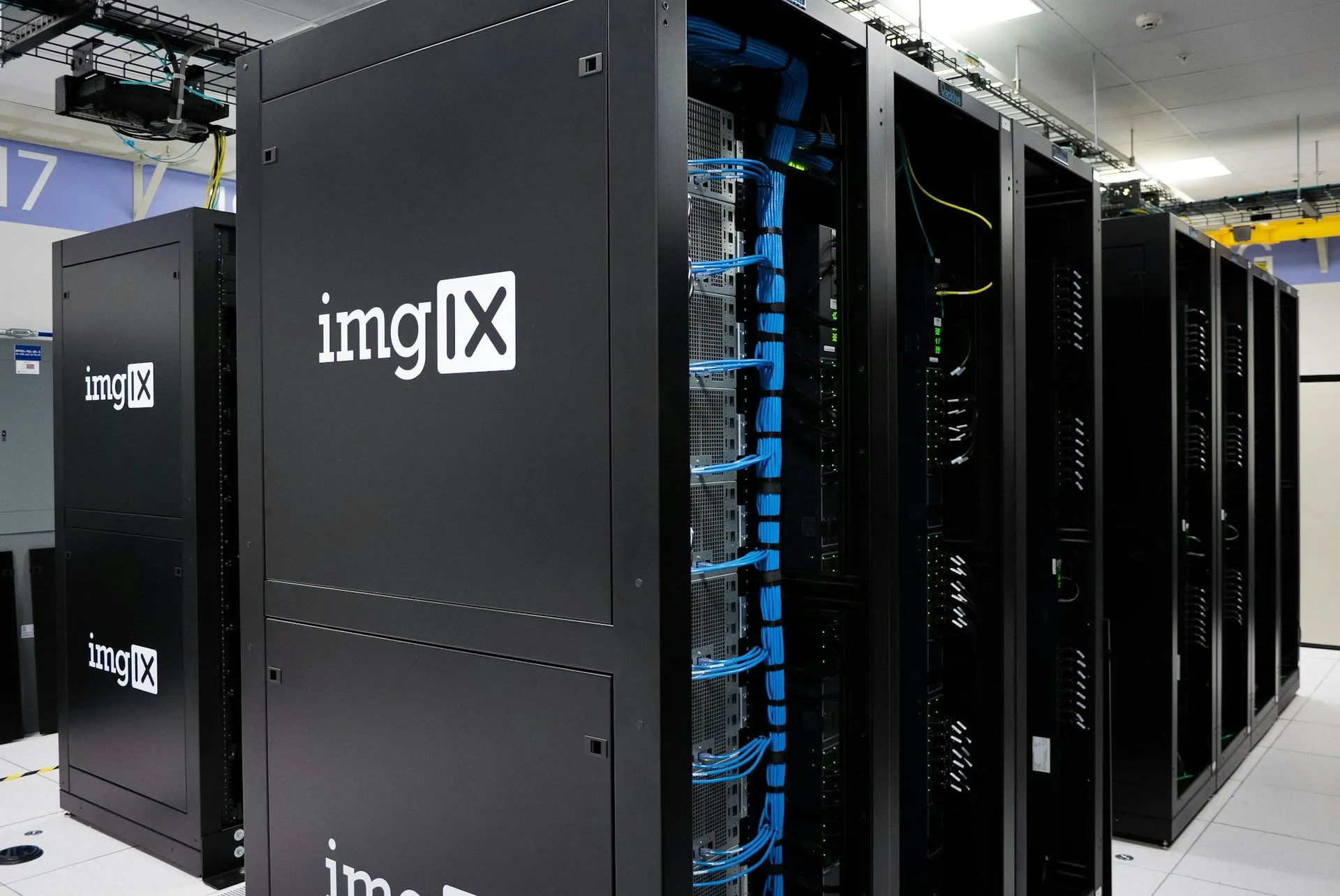
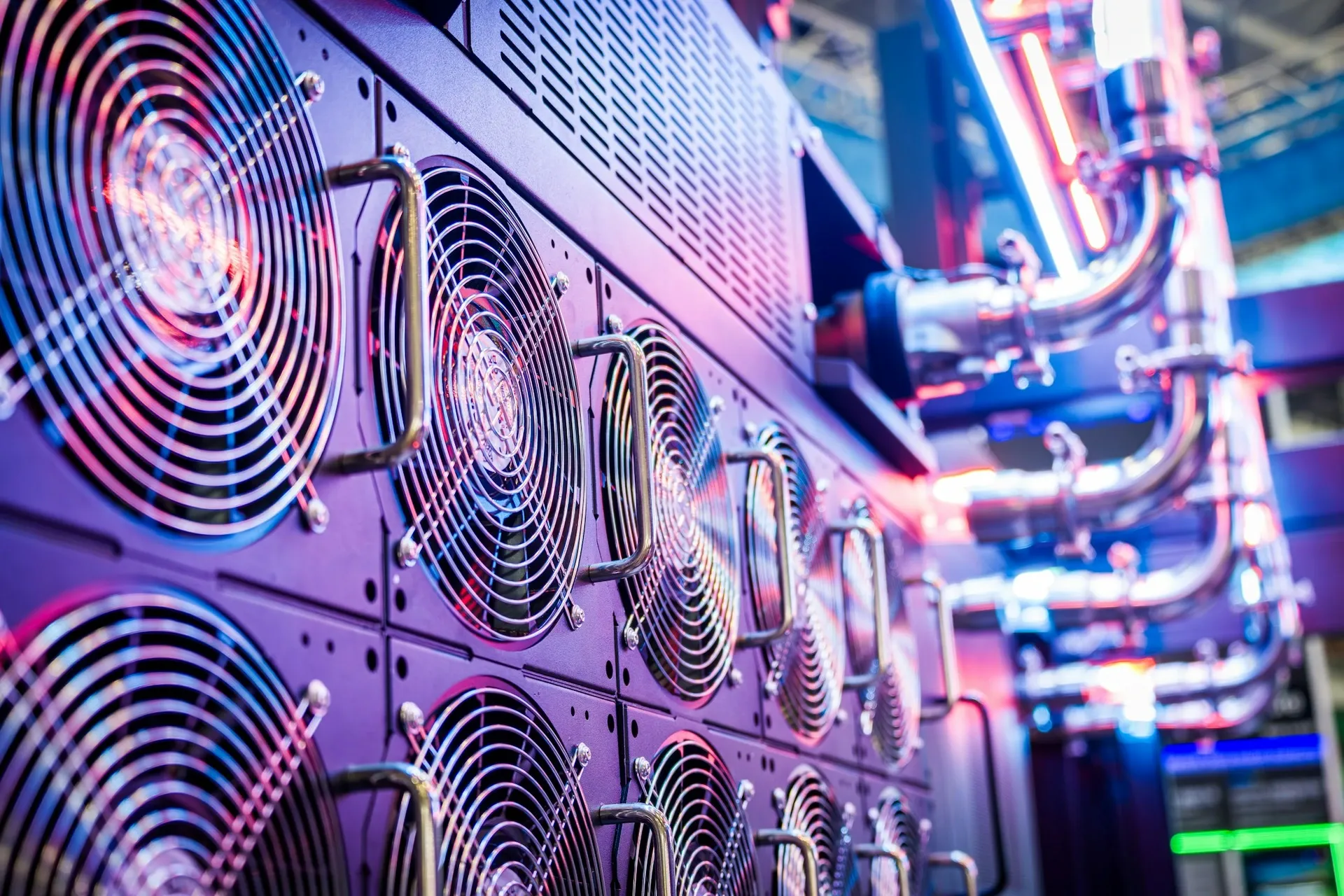
Notice the chain: weather → surging energy demand → cooling gives out → the data center protects itself and shuts down → and at the very end of that line is your website, failing to load right at the peak of a summer campaign. We call this chain the physical footprint of the cloud. The word "cloud" makes you think your operations exist somewhere up in the air, weightless, independent of weather. That's not the case. The cloud is a building. And a building needs cooling.
The numbers that make this more serious in 2026 than ever before
Three independent sources paint the same picture.
According to First Street, a climate modeling firm, this year's analysis shows that 54% of the world's data centers stand in areas where extreme heat or water scarcity creates chronic stress. So this isn't an edge case — the majority of capacity is exposed.
The World Economic Forum's 2025 analysis puts the long-term climate-related damage to the data center sector at $3.3 trillion, with more than two-thirds of that coming from a single factor: extreme heat.
And here's the twist that makes 2026 different from 2022. According to the International Energy Agency (IEA), global data center electricity consumption grew 17% in 2025, and AI-focused data centers grew by 50%. In other words, we're cramming record amounts of energy-hungry AI hardware into server rooms exactly when cooling them is hardest. Cooling already accounts for roughly 40% of a data center's energy consumption under normal conditions — and in heat, it spikes right when the whole grid is being pushed to its limit by air conditioning demand. As one expert put it to CNBC, data centers need the most power exactly when the grid has the least to give.
In plain terms: the risk to your digital operations hasn't grown on its own. It's growing simultaneously with AI load and with warming — and the two meet at exactly the same point.
And what doesn't "it's in the cloud" solve?
Here's where the SME decision-maker's most common misconception comes in: "this isn't my problem, Google, AWS, or my hosting provider handles this." Partly true. The big providers really do spend enormous sums on cooling and redundancy. But there are three things they don't solve for you — and these three are exactly where the trouble reaches small and medium businesses.
The first: redundancy isn't a default, it's a decision. Whether your website runs in multiple geographic regions at once, or in just one, cheaper zone, is a setting — and a cost. Most SMEs run in a single region because it's cheaper, and because no one ever made a conscious decision about how much risk they're taking on. In 2022, it was exactly the single-region customers who went down.
The second: AI tools run on the same infrastructure. The chatbot, the content generator, the automated customer service that you're building more and more of your operations on live on the very same overloaded data centers that slow down or shut down in the heat. Your "smart" automation can let you down at exactly the peak, at the worst possible moment.
The third: the alert tells you that you're down — it doesn't come with a plan. Monitoring signals that something's wrong. But it doesn't decide for you who to call, what to tell your customers, or which system to restore first. The technical signal of an incident can be automated. Managing the incident cannot.
How we think about this: the continuity chain
So this isn't just about one current heatwave, it's worth seeing the framework we use to think through every decision like this. The chain runs top-down — and it never starts with the server, it starts with the business:
Business risk — how much revenue, how many customers, and how much trust is on the line if operations stop?
↓
Digital dependency — which systems, if lost, would bring your company to a halt within an hour?
↓
Technical architecture — where, and how many times over, does this infrastructure actually run?
↓
Operations — who's watching, who steps in, and how fast?
↓
Business continuity — operations keep going even when something breaks.
Most companies do this backwards: they start with the server, and never make it to the first line. We start from the first line. The goal isn't the technology — it's the business's continued operation.
When should you NOT worry about this?
Let's be honest: not every company needs to build a multi-region, highly-available system. It costs money, and sometimes it genuinely is overkill.
If you have a static brochure site that doesn't generate real-time revenue, and you can tolerate a rare, one-day outage without losing customers or money — then full redundancy would be over-engineering for you. In that case, the responsible advice isn't to spend more, it's that an organized backup and a realistic recovery plan are enough. So the question is never "is my system modern," but exactly how much business you lose during the hour you're offline — and whether it's worth insuring against that.
What do you actually need? — a simple decision matrix
There's no one-size-fits-all answer; the right level depends on what you lose during downtime. As a rough compass:
If this is your website → here's what you actually need:
- Brochure (static) website — Regular, tested backups are enough
- Lead generation site — Monitoring + fast, rehearsed recovery
- Webshop — High availability and redundancy
- Critical business system (e.g. your own SaaS, booking or ordering engine) — Multi-region architecture, planned failover
The matrix isn't an excuse to keep putting this off for "someday" — but it also protects you from buying a multi-region system for a brochure site. The question is always the same: how much business do you lose in an hour, and is it worth insuring against?
The named trap: the 99.9% SLA
There's one number that lulls a lot of business leaders into false security: the provider's promise of "99.9% uptime." It sounds good. But there are two things worth knowing about it.
First, 99.9% still allows for nearly 9 hours of downtime per year — and by Murphy's law, that won't land at 3am, it'll land at the peak of your campaign. Second, and more importantly: an SLA doesn't protect you. It pays you back. If it's breached, you get a credit of a few dollars on your next invoice. It doesn't bring back the orders you lost that day, the customer trust that took a hit, or the half a day your checkout was down. Whoever buys an SLA number instead of preparedness isn't reducing risk. They're just buying a piece of paper about the risk.
Let's make it concrete, in real numbers. If your webshop does $3,000 an hour in revenue, then a two-hour outage isn't "a two-hour technical glitch" — it's $6,000 in lost revenue, plus the customers who left that day and finished their purchase with a competitor, and often stay there. Out of that, a 99.9% SLA refunds you a few dollars. The question isn't what kind of server you have — it's how much money you lose during one hour of downtime.
So what can you actually do about it?
The good news: most of the defense isn't extra technology, it's a conscious decision. Where does your website actually run — in one region or several? Do you have a working, tested backup, or only one in theory? What are the three systems without which your company grinds to a halt within an hour, and what's your plan for that hour? These questions don't get answered by an automated scanner — they get answered by a person who knows your business.
Because your website isn't in the cloud. It's in a building, and someone has to keep that building cool. And when that building overheats, the question isn't whether the technology failed. The question is whether you were ready for it.
When is it worth bringing us in?
Our job isn't to scare our clients into buying an expensive, multiply-redundant system they don't need. It's the opposite. We don't sell hosting — we plan business continuity. We're the ones who ask the uncomfortable question before summer gets hot: where does your digital operation actually live, what happens to your business the moment it goes dark, and who you call when it does. Then we tell you honestly where it's worth investing in resilience — and where it wouldn't be.
"We don't sell hosting — we plan business continuity."
That's why, for us, the ending isn't a generic "let's talk," but a specific, well-defined entry point: the W5 Labs Digital Resilience Assessment. A short, focused audit where we go through, together, where your operations physically run, which three systems, if lost, would stop your company within an hour, and exactly how much business loss — in real money — a 2-hour outage would mean. At the end, you don't get a quote — you get a decision-ready picture: where it's genuinely worth investing in resilience, and where it wouldn't be.
One strategic thought to close on: in 2026, extreme weather is no longer a line in the sustainability report — it's a business continuity risk, belonging in the same drawer as cybersecurity or losing a key employee. A leader who treats it as a risk this way isn't passively waiting for next summer — they decide in advance how much downtime they can afford. The goal isn't the technology — it's the business's continued operation.

But the heatwave is just the current occasion. Our goal is broader than that: to design digital systems that don't just survive the next 42°C day, but carry your business forward, predictably, over the long term. Because the real value of a well-designed system isn't that it survives one hot Tuesday — it's that, years down the line, it still gives you a solid foundation for growth: it can handle more traffic, new features, the next campaign — without you having to rebuild from scratch. We don't just build websites. We design and build digital systems that support businesses' operations and growth over the long term.