There's a lot of talk lately about how artificial intelligence is turning the design market upside down — and many are asking: when is AI enough for web design, and when do you need a human designer instead? But can it really replace genuine, strategic product design?
Here's an experiment worth trying once. Open any AI website builder you like — v0, Lovable, or Figma Make — type a single sentence describing what you want, and look at the result. At first, it will probably impress you. Clean, well-proportioned, completely professional work.
Then search for five similar startup websites — you'll see the same thing. The same hero section, the same card layout, the same generic sans-serif typeface, the same pale gray background. This isn't a coincidence: when everyone uses the same tools and the same training data, the outputs eventually converge. AI isn't capable of genuine creativity — it simply recycles templates that have already proven themselves a thousand times over on the web.
This isn't a flaw in the technology — it's simply how the system naturally works. UI/UX design today is no longer about beautiful interfaces; it's about how you gain a competitive edge over commodity solutions.
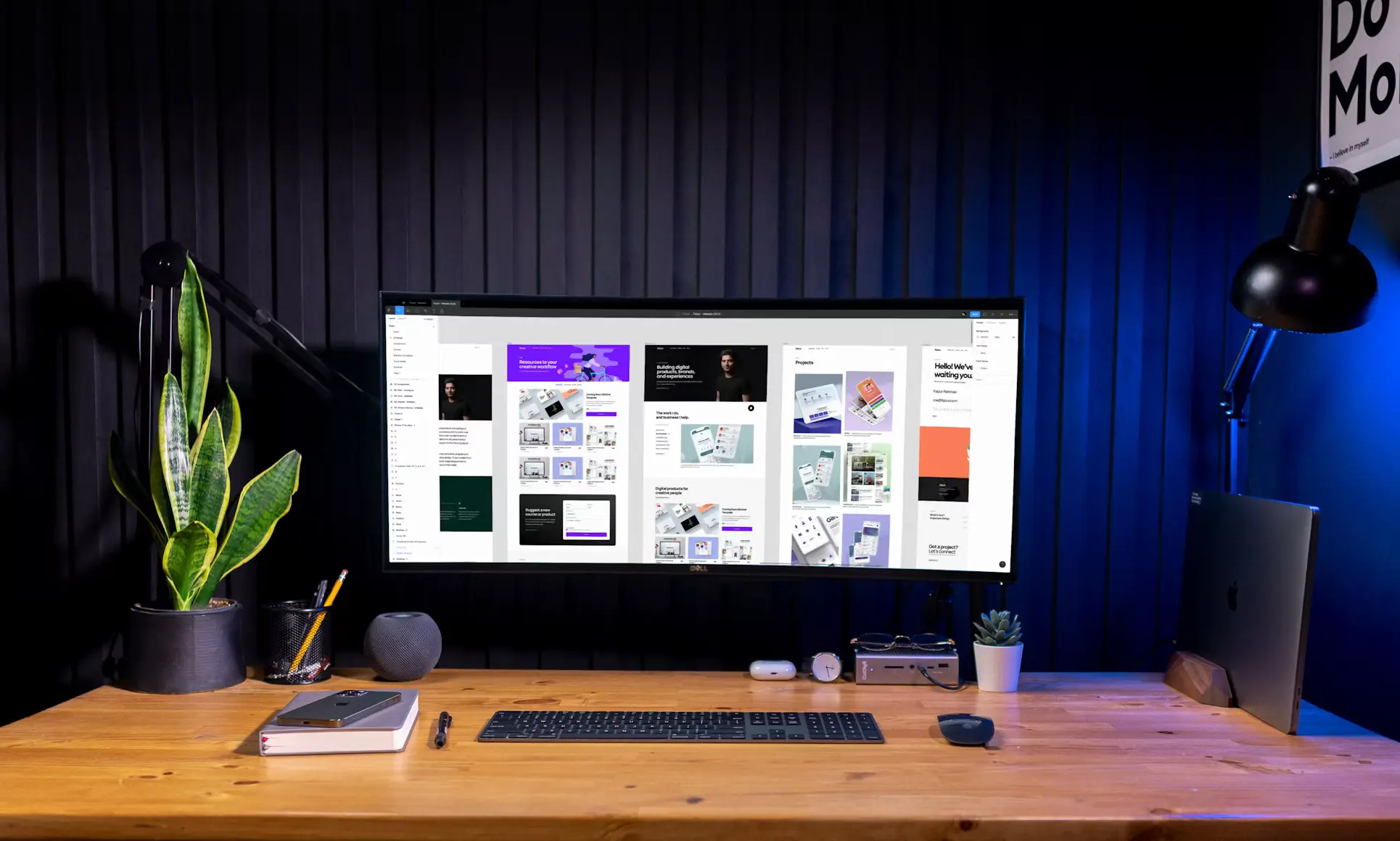
AI design is free. Invisibility, however, comes at a cost.
Generative AI design is brilliant when you want to put together a working site quickly and cheaply. It rarely makes big mistakes, it delivers the baseline standard, and it's perfect as a template. The problem starts when your competitors are using exactly the same AI tools. If your site is built from the same template and the same logic as everyone else's in the market, you simply become invisible in the eyes of your potential customers.
In cognitive psychology, this is called processing fluency. Our brains automatically process visual stimuli most easily when they're already familiar. This familiarity creates a sense of safety in the short term, but in the long term it completely washes out your brand's character. A user's brain simply skips over anything that looks just like a dozen other sites. They keep scrolling without you leaving any trace at all.
And yes — users sense AI-generated design, even if they can't put it into words. The power of a strong visual identity lies precisely in the character and uniqueness that generative AI, by its very nature, strips away. The moment something feels slightly different, distinctive, and deliberately intentional, the visitor's attention shifts and your brand registers with them. Something available to anyone for a few thousand forints simply won't give you a competitive edge.
AI or a human designer — which should you choose? What can't be prompted into existence
Industry consensus in 2026 increasingly points in one direction: the best results come from combining AI with human expertise — AI for drafts and volume, humans for strategy, refinement, and distinctiveness. But someone has to be in charge of that combination.
AI's shortcomings are usually described as technical limitations: that it doesn't know the market, the target audience, or the brand's history deeply enough. All of that is true, but the real problem runs much deeper. There are three areas where artificial intelligence simply falls short in graphic design and UX:
1. The reality of the local market
A Hungarian SME decision-maker makes business decisions according to an entirely different logic than a growth hacker in San Francisco. Different visual cues signal trustworthiness to them, different content convinces them that a company is serious, and they measure premium quality in a completely different way. This kind of local market experience and cultural nuance can't be loaded into a prompt as data.
2. When reality gets in the way
AI optimizes for ideal scenarios. It assumes a user who clicks around at leisure, where every button responds instantly and the environment is free of distractions. In reality, though, we rarely get a customer's full attention. Most of the time they're in a hurry, juggling three other things at once, or trying to get something done while being jostled around on a bus. If they hesitate for even a moment because of a confusing icon or error message, they've already left the site. AI is incapable of anticipating this human factor in advance. We, on the other hand, specifically look for and fix exactly those pitfalls where real customers get lost.
3. The honest professional "no"
AI will never argue with you: it carries out every request without question, even if it's self-indulgent, unnecessary, or actively harmful to the business in the long run. It simply isn't a thinking partner. It lacks the critical perspective that's essential to good agency collaboration and from which the best solutions ultimately emerge.
Our greatest value isn't that we can produce whatever you ask for — it's that we can tell you when you don't need it. We speak up in time if a feature is unnecessary, before the budget and the time go into it. In our profession, restraint and business logic matter just as much as pixel-perfect execution.
What does "craft" actually mean in conscious design
When people hear the word "craft," many think of slow, handmade, expensive products, but in digital design it isn't about speed or money — it's much more about someone taking responsibility for every single decision.
Craft is choosing a font size not because that's what the template had set, but because we know it's what your customer will read most easily. Craft is when the roundness of a button follows from the brand's own distinctive character, rather than being copied from a ready-made design system. And craft is also saying no to a striking but unnecessary visual element, because in the long run it would only weaken the brand.
On their own, these are small, almost invisible decisions. Users probably won't consciously notice a single one of them. Together, though, they build something an algorithm will never be able to replicate: perfect coherence.
When every element on a website has a precise reason behind it, visitors feel it immediately, and that builds trust. This is exactly the logic missing from AI templates: however good they look at first glance, their essentially random elements leave them ultimately characterless. Conscious design makes you stand out from the crowd; an AI template just becomes one more in a sea of identical sites.
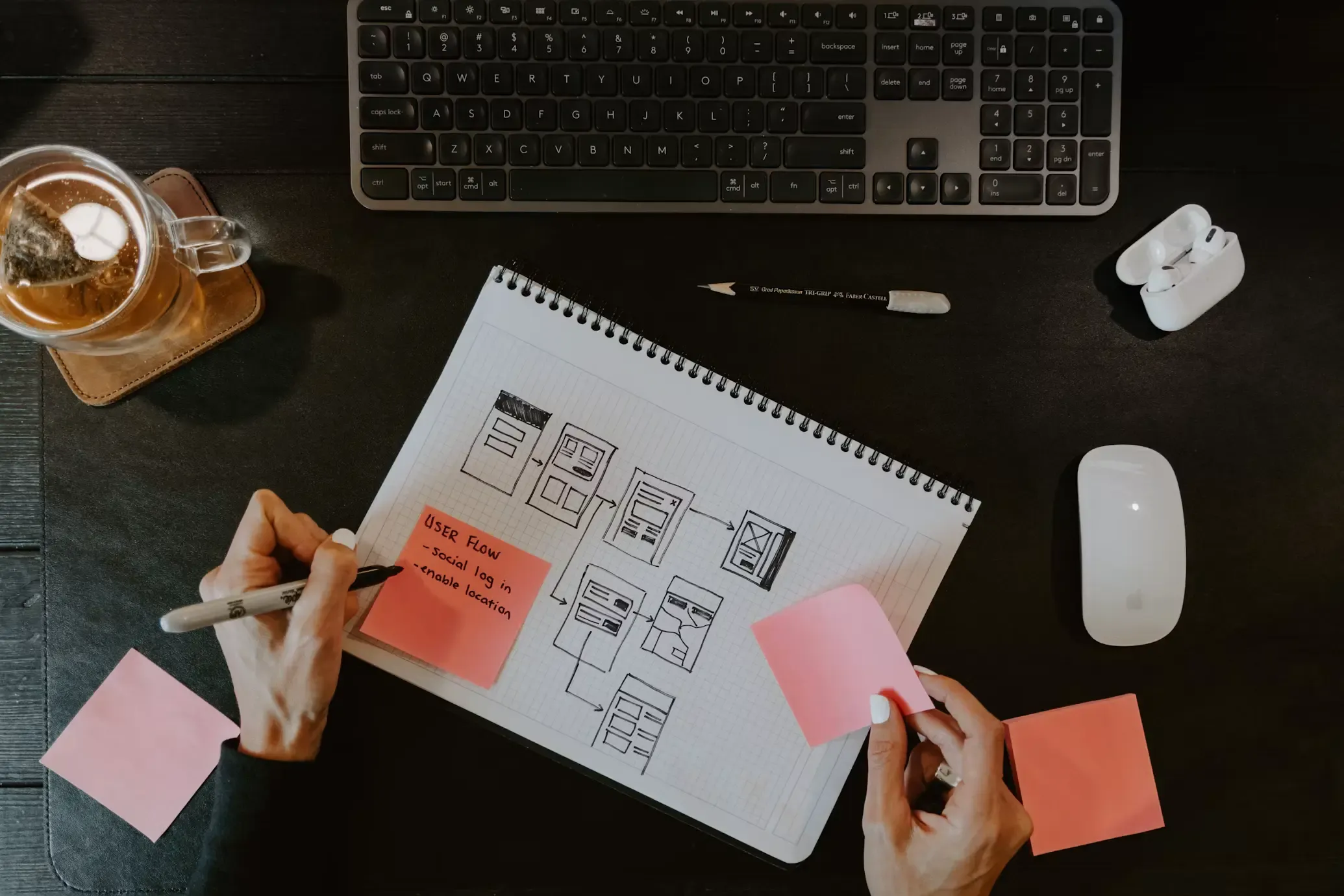
The shakeout of the digital market
We already saw this pattern play out once before, when Canva took off. Branding agencies didn't close down then either — the market simply reorganized itself at lightning speed: cookie-cutter, templated logos and commodity graphics lost their value almost instantly, while genuine, strategic, custom design became more valuable than ever.
The same structural shift is happening now with AI, just on a much larger scale. Artificial intelligence won't replace complex product design built around real business goals. It simply turns into a mass-produced, few-clicks-away commodity what was already being cobbled together from ready-made templates without any real thought behind it.
Producing "pretty good" quality now costs almost nothing, and that completely upends how things used to work. When anyone can get a commodity solution at the push of a button, average design instantly loses its value. The market is splitting sharply in two: there will be unsupervised, purely AI-assembled template sites on one side, and a premium category where every decision is driven by real business logic and human accountability on the other.
So when does it actually pay off to bring in an agency or expert team?
Exactly when you don't want a one-click template solution for the web, but a digital tool that converts, builds trust, and delivers business results.
AI can add a huge amount to the process, but it's still human strategy that makes the system work.
Behind the whole discussion of craft and deliberate design, it's worth naming what clients actually measure. Most clients don't care whether AI or a designer was behind a page. What they care about is how many inquiries, new customers, or how much revenue a given solution brings in. So the wrong question isn't "AI or designer."
The right question is: which solution delivers more business results.
A case in point: the project where the machine worked, but the human was in charge
What does this mean in practice? At W5labs, we experience this situation every single day, and our most recent point of pride, the TopPetFood landing page, is the best example of it. In fact, let's be completely honest: a significant part of TopPetFood's visual world, its offer displays, and its background processes were built heavily with the help of AI. So why was an agency needed at all?
Our job was exactly the craft part: taking the volume that AI produced at astonishing speed and forcing it into a distinctive user journey, visual hierarchy, and rigorous business logic that no algorithm could ever assemble on its own. AI delivered the pixels, but W5 Labs designed the presentation logic and the structure that turned the whole thing into a genuine, professional brand site.
Why we never hand the decision over?
As a tool, AI is brilliant, and it's part of our everyday work too. We've built it into our processes, and it helps a great deal with research, brainstorming, and putting together quick prototypes — exactly the way the best players in the industry are doing it in 2026.
But we never hand the strategic decision points over to an algorithm. We don't, because for us, design is fundamentally psychology and communication. We create an environment on the site where visitors feel safe, so that they ultimately take the step we and our client want them to take together. And that requires not just data, but genuine human intent. Whether it's the wording on a button, the arrangement of generated elements, or the logic of the structure — behind every detail at our agency stands a professional who pulls the technology together and validates it. Someone who doesn't sign off on the final result based on gut feeling or the random output of a prompt, but who knows exactly why each decision was made and can explain it to you at any time.
This is what design means to us. Not just a striking interface that pops out at the push of a button, but a deliberately, thoroughly thought-through process. AI can produce building blocks of astonishing quality, but it's still humans who turn them into a system and into business value. And that — for now, and perhaps for a long time to come — can't be prompted into existence.
If you want to build a digital product that doesn't just chase trends but builds real business results and trust, let's talk about your next project.