Nobody spends the whole day writing prompts. This is one of the most widespread misconceptions about the best Western agencies, and it's exactly what hides what really matters. In 2026, the question is no longer whether an agency uses AI. The question is whether AI is part of the operation, or just an open browser tab.
The question nobody is asking anymore in 2026
At the best places, AI isn't present during the creative work itself, but before and after it, in the preparation and the refinement, so that the team only has to deal with what they're actually being paid for. Monks, for example, automates storyboard creation and lighting mockups in the pre-production phase, so the team can focus on the actual creative decisions. Sagar Jadhav, creative director at Ogilvy Mumbai, put it the same way when he said it doesn't matter to him whether it takes 20 or 200 prompts, as long as the work looks exactly the way he imagined it, because for him AI always remains a tool, never the one in charge.
A few years ago, agencies investing in AI were still a minority; today, the decisive majority of the sector uses some form of AI in its daily work. But this ratio doesn't say much anymore, because the interesting question hasn't been whether someone uses AI for a long time now, it's what they do with it. There are agencies where AI is one tool among many, and there are agencies where AI is the backbone of the entire operation, and while the former just gets faster because of it, the latter becomes fundamentally different.
An AI tool saves time. An AI system transforms how you operate. Whoever just wants to work faster is looking for a tool. Whoever wants to operate differently is building a system.
The difference isn't decided at the level of tools, since anyone can open ChatGPT, Midjourney, or Claude, regardless of whether they're a three-person studio or a global network. What actually separates the players is how thoughtful a process, strategy, and human judgment they embed the same tool into. A prompt is not a strategy.
According to McKinsey's research on developer productivity, certain coding tasks can be completed up to twice as fast with generative AI tools, if the tool is genuinely built into the workflow, but for complex tasks this effect is much more modest, and it's exactly this "if" that separates the two paths.
Where strategy and research get automated
Digitas built AI agents into its strategic work and shaved three days off brief deadlines with it. In their case, it's not that AI writes the brief, but that it takes a large part of the preparatory work off the strategist's shoulders, meaning it summarizes the market research, processes the lessons of previous campaigns, and carries out the competitive analysis. By the time the strategist sits down to work, most of the homework is already done, and all that's left for them is the part nobody else can actually do in their place: evaluation, questioning, and deciding what the business decision should be.
AI does the homework. The strategist decides what becomes a business decision out of it. Research can be automated, judgment cannot.
Agency GUT went even further, having developed a tool called "AI Personas" that generates simulated consumer reactions based on first-party brand data, social listening, and behavioral data, and it's strong precisely where AI usually is the weakest, meaning in contradiction. One of their executives said in an interview that AI usually agrees with people and doesn't tend to generate conflict, except people aren't like that, so their simulated audience also produces genuine resistance, which ultimately makes the work better.
When the system itself becomes the competitive advantage
At the biggest players, this logic goes a level further, because they don't support one process or another with AI, they build their own infrastructure around it. Publicis has its own CoreAI platform, which, according to the company, integrates 2.3 billion consumer profiles and a huge amount of performance data into a single system, from ideation all the way to campaign optimization, and WPP has WPP Open, through which Ogilvy or VML generate storyboards, briefs, and creative variations at scale, for brands like Coca-Cola or Wendy's. Omnicom has its own Omni system, and although the three platforms are technically different, the underlying logic is the same.
These aren't tools in the traditional sense, but integrated intelligence layers of campaign production, built into day-to-day operations.
ChatGPT is a tool. WPP Open is already an operating infrastructure. And the real competitive advantage begins exactly when AI disappears from the interface and becomes embedded in the operation. Using a tool speeds things up; building a system restructures how you operate.
When enthusiasm alone isn't enough
At the same time, it's important to be honest that this is far from an automatic success. According to joint research by IDC and Lenovo, 88% of AI pilot projects never reach wide-scale deployment, which in practice means that out of 33 pilots launched, on average only four survive the trial phase. The most common reasons are lack of infrastructure, missing governance, and lack of measurable ROI, meaning failure is almost never about the tool, but about the fact that nobody thought through in advance the process AI was supposed to be embedded into.
Most AI projects don't fail because the model is bad. They fail because there's no working system around it. Automating a badly functioning process isn't innovation, it's just a faster mistake. Those who scale successfully typically invest in infrastructure up front, document governance before rollout, record baseline metrics, and have someone responsible for post-rollout performance, meaning that for them, success is not a technological question, but an organizational and mindset question.
This realization also explains why creative roles haven't disappeared, they've just changed. According to an analysis by the Nielsen Norman Group, more than half, 55%, of UX-related tasks have already been performed with AI at least once, which shows just how naturally AI has become part of the iterative work. Part of junior-level content production, traditional storyboard drawing, or stock photo research has been significantly simplified, while new positions have emerged, and today one of the most sought-after is someone who can design the processes between people and AI agents. Rodrigo Mitma, creative director at We Are Social Singapore, put it exactly this way when he said that AI is a tool, not the creative, and that the final ideas and products still need to remain human.
The competitive advantage isn't in the model, it's in how you build it into your operation.
We went through this same path too
Two years ago, we were also looking for better AI tools. Today, we're building better operations.
For us, this isn't theory, it's daily practice. Back then we asked which model writes better text and which one generates better images; today we ask which workflow we can remove unnecessary human work from, and where exactly is the point from which the decision must still be made by a human. This shift wasn't technological, it was a shift in mindset, and we believe that this shift in mindset is what truly matters, not the list of models used. For us too, AI is the first layer, the one that speeds up the draft, the visual concept, and the research; the strategic decision, the responsibility, and the final judgment, however, we never entrust to an algorithm. A Hungarian SME is in a different decision-making situation than a growth hacker in San Francisco, so we tailor the system to our own reality and to our clients' reality too, rather than adopting someone else's wholesale.
The other side of the story: does AI even know about you?
But there's another side to this story too. While companies are trusting AI with more and more, AI is also making more and more decisions about which companies it shows. So the question isn't just how you use AI. It's also whether AI uses you as a source.
So far we've talked about how the big players use AI in production; from the perspective of a Hungarian business, though, there's an at-least-equally important question that's rarely discussed. While agencies use AI to produce content, your potential customers increasingly use it to search, asking ChatGPT, Google's AI Overviews, Gemini, or Perplexity about exactly what you offer.
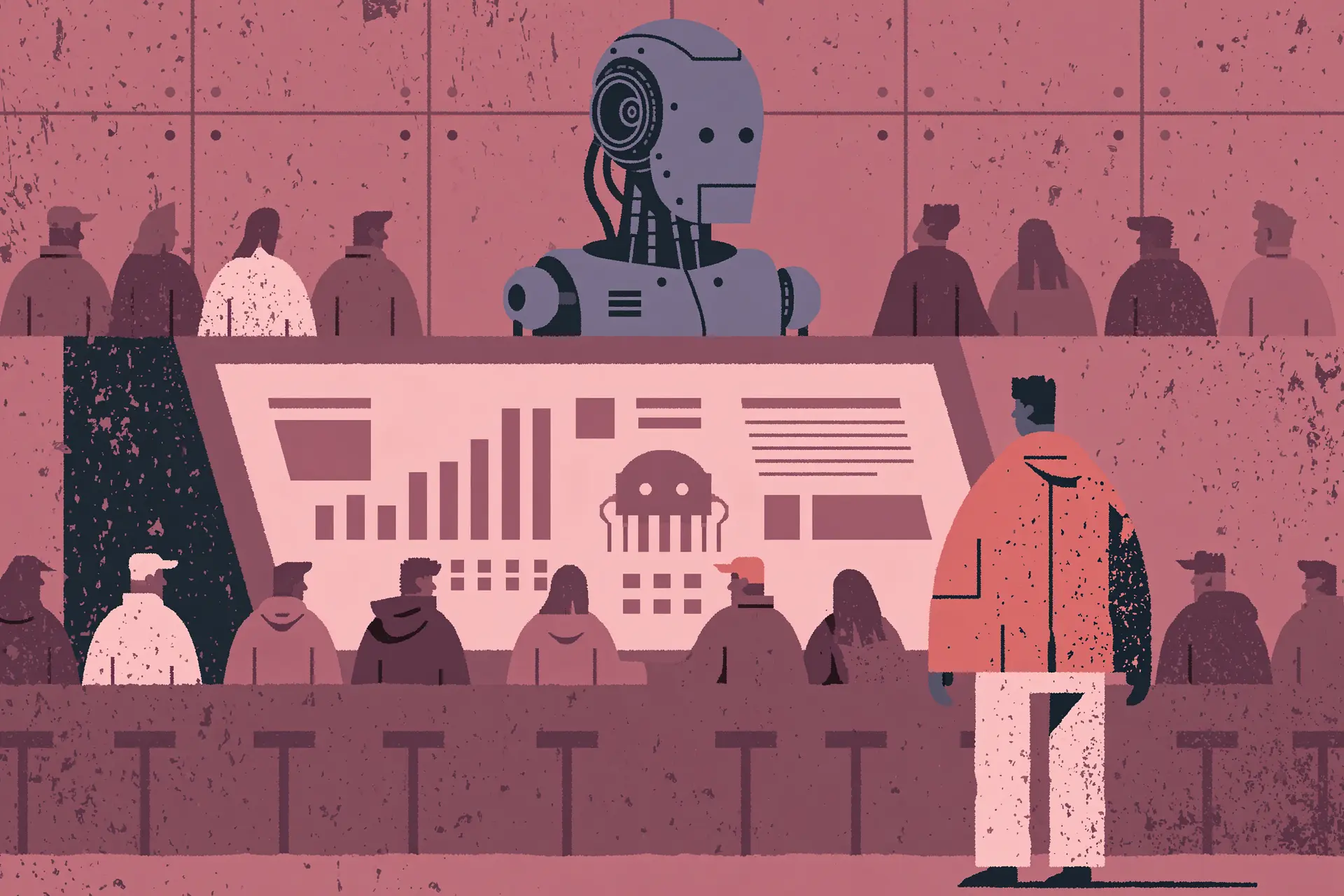
And here comes an uncomfortable truth. However excellent your content is, if your website isn't technically understandable to these systems, because its structure is wrong, its semantics are missing, or it wasn't designed for machine readability, you simply won't appear in these answers. Good content alone is no longer a competitive advantage today, because communication, technological foundation, and findability form a single system, and if even one layer of it fails, the whole thing becomes invisible. This layer is called GEO, meaning Generative Engine Optimization, or AI Visibility, and in 2026 it's no longer optional, it's a baseline requirement.
Where we come in
W5labs designs and builds the digital systems that businesses' growth is built on: strategy designs the system, creative shapes its communication, development builds it, and support keeps it running and protects it. Together these make up the digital infrastructure our clients' growth is built on, and the same principle guides us when it comes to our own use of AI as well.
The tool is the same for everyone. The system it's embedded into is not.
In the coming years, the businesses that win won't be the ones using more AI tools. It'll be the ones building better systems. If you're curious how well your current website, content, and digital presence support your business growth, and how visible you are to today's AI search engines, let's go through it together.